
Fall is now upon us meaning there are only three months left to consider making smart moves to manage your tax obligation. With this in mind, why not review the tips included here to see if there is an area or two worthy of your attention.
Plus consider a deeper dive into the long held idea of creating an emergency fund. When you look at it, you see that there are different kinds of emergencies, each with their own specific needs. So included this month are some ideas to consider to reduce the chance an emergency will take ahold of you and your family.
Tax Questions Worth Asking Before Year-End
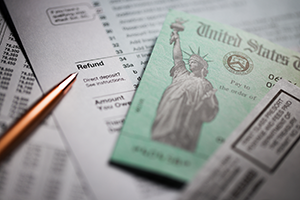
Take a few minutes to ask yourself the following tax questions as we approach the last several months of 2026. The answers could uncover a problem – or an opportunity – while there’s still time to do something about it.
Am I going to owe or get a refund?
A large tax refund isn’t necessarily good or bad. The better question is whether that money would be more useful throughout the year or as a lump sum at tax time. For example, a $3,000 refund represents about $115 from every biweekly paycheck. Would having that extra money throughout the year help with monthly expenses, saving, or paying down debt? Or does receiving $3,000 at once make it easier to accomplish a larger financial goal? Review your withholding before year-end to decide which approach works best for your family.
Did I have extra income that didn’t have withholdings?
Think about any money you made outside your regular paycheck. Maybe you did some freelance work, picked up a side gig, earned rental income or made money from investments. Unlike a paycheck, taxes may not have been taken out before that money landed in your pocket. Add it all up before year-end so you have a better idea of what it could mean for your tax bill and whether you should make an extra tax payment now.
Did I experience any major life events?
Think about what changed in your household during the year. Marriage, divorce, a new baby, a child leaving home, retirement, or the death of a loved one can all affect your tax return. So can less obvious changes such as beginning to support an aging parent or having a child start college. Bringing these changes up before year-end can uncover tax credits, deductions or planning opportunities that might otherwise get missed until it’s too late to act.
Did I have any transactions that would cause a taxable event?
Selling stocks is an obvious example, but taxable events can come from many places. Did you sell real estate, cryptocurrency, a business interest or another valuable asset? Did you exercise stock options or receive proceeds from an investment? Review any significant financial transactions you made during the year. Knowing about gains and losses before December 31st may also provide opportunities for additional tax planning before the year closes.
Did I change jobs?
A job change can create several possible tax issues. Your new employer may withhold taxes differently, especially if your income changed significantly during the year. You may also have received a bonus, severance payment, unused vacation payout, or other compensation from your former employer. And don’t forget about your old retirement plan. Before year-end, review your withholdings, retirement contributions and anything else that changed when you switched jobs.
A little tax planning now can make filing your 2026 return a lot less surprising. Please call if you’d like to discuss these and other questions about your tax situation.
Rethinking Your Emergency Fund
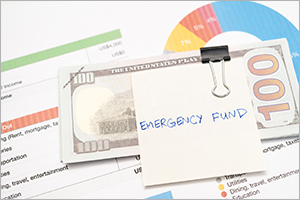
We’re told to build an emergency fund for life’s unexpected expenses. But the word unexpected can cover a lot of financial territory.
A major car repair? Emergency. Unplanned medical bill? Emergency. Job loss? Definitely an emergency. Before long, you may find yourself relying on that one pot of money for all sorts of expenses that don’t fit neatly into the monthly budget.
Here are a few ways to rethink your emergency savings and prepare for the financial surprises you may not be able to predict but can still plan for.
Plan for categories, not catastrophes
You can’t predict exactly what will happen, when it will happen or what it will cost, but you can anticipate many categories of financial surprises. Identify the risks most relevant to your circumstances, such as vehicle repairs, home maintenance, medical expenses, pet care or an unexpected loss of income. Thinking in categories can make an otherwise vague savings goal more concrete and help you decide which financial risks deserve the most attention.
Give predictable surprises their own space
Some expenses are unpredictable in timing but predictable in existence, making them good candidates for regular monthly savings. Setting aside money for categories such as vehicle replacement or home repairs means the expense can still be unexpected, but the money doesn’t have to be. Even relatively small monthly contributions can build a reserve that keeps the next broken appliance, veterinary bill, or trip to the mechanic from competing with every other financial priority.
Give your emergency fund a narrower job
Once some of those irregular-but-foreseeable categories have their own funding, decide what you want your emergency fund to cover. Maybe its primary responsibility is to replace income. Maybe it’s simply the financial backstop for something you genuinely didn’t anticipate. Giving that money a clearer purpose can also make it easier to determine how much you actually need instead of relying on a single rule of thumb.
When the balance goes down, your plan may be working
There’s something psychologically difficult about spending savings. You work hard to make the number go up, so watching it fall feels like moving backwards. But if money was deliberately saved for car repairs, home repairs, income interruptions or life’s other financial disruptions, using it isn’t necessarily a setback. In fact, being able to pay an unexpected bill without taking on debt or disrupting the rest of your budget is exactly what those savings are meant to accomplish. The next step is to continue saving to replenish your emergency account.
Sometimes the best emergency plan isn’t predicting the emergency. It’s making sure the money is ready before you know what it will need to replace. By giving different kinds of financial surprises their own place in your savings plan, the next unexpected expense may feel a little less like an emergency.
The Apps You Forgot You Had – and What They May Know About You

Take a look at the apps on your phone. Some you use every day. Others were downloaded to pay for parking, order dinner or attend an event and haven’t been opened since.
These forgotten apps can add up to more than digital clutter. They may still be connected to accounts containing personal information, which is exactly the kind of data that’s valuable to identity thieves.
Here’s a look at what information your apps may be sharing and why an occasional app clean-up can help clear up some digital clutter while also reducing your exposure to identity theft.
Your apps may know more than you realize
Companies want you to download their app because of its ability to collect information about you. Some of this information can help the company serve you as a customer. But depending on the app and the permissions you’ve granted, it may also collect or have access to personally identifiable information (PII), such as:
- Your location
- Your name, address, phone, and email
- Contacts
- Photos and videos
- Camera or microphone
- Bluetooth or nearby devices
- Credit card and billing information
- Health or fitness information
- Advertising identifiers or activity used for tracking
- Usage information about how you interact with the app
This doesn’t mean an app is unsafe or that you shouldn’t use it. Rather it’s a reminder to understand what information an app collects and why it needs it before deciding how much access to give it.
Your app clean-up checklist
Consider going through this checklist every so often to make sure you’re not giving your apps more information than they need.
- First, delete as much of your personal information as possible. Removing an app from your phone doesn’t necessarily delete the account and personal information. This includes credit cards and addresses. Even consider leaving a hidden code within your name to see if it ever pops up somewhere else. If you’re unlikely to use it again, consider closing the account as well.
- Then delete apps you haven’t used in several months. Pay particular attention to apps you downloaded for a one-time purchase, trip, event or other specific purpose. Remember to remove any PII before deleting the app.
- Try the website instead. Go to the app’s website and double check changes and close the account here as well if it makes sense. And before downloading another app, see whether you can accomplish the same thing on the company’s website without adding their app, or potentially another account, to your phone.
- Take a tour through your permissions. Check your phone’s privacy settings to see which apps can access your location, photos, contacts, camera and microphone, then turn off access that an app doesn’t need to do its job.
- Reduce the personal information you hand over. For apps you do keep, limit the information you share. Consider skipping optional profile fields, using guest checkout when possible, and thinking twice before providing details such as your birth date, address or contacts. And remember, unless your app requires monthly billing, delete your credit card information. The smaller your credit card footprint the better.
- Reduce your email footprint. Create a separate email that is ONLY used for your phone apps. Then if you are ever breached or your email account start building with clutter, you know the culprit is one of your apps and can change the email to a new one.
The Convenience Premium: Deciding When It’s Worth It

We routinely pay more to save time, effort or frustration. The important part is recognizing when you do it and understanding how much this convenience premium actually costs. Convenience premiums are built into our spending all year long:
- Food delivery instead of pickup
- Pre-cut produce instead of whole produce
- Same-day shipping instead of waiting
- Car washes instead of washing your car at home
- Prepared meals instead of cooking
- Grocery delivery instead of shopping
- Individual packages instead of buying in bulk and portioning
- Cake mix instead of making your own
- Laundry or wash-and-fold services
When deciding whether convenience is worth the extra cost, consider the three C’s: cost, consistency, and circumstance.
Cost: Getting your money’s worth
Try to compare the extra cost with the time or effort you’re saving. Some easy comparisons can be found in the grocery isle. Compare cut mushrooms and carrots to uncut on a cost per ounce. Do the same comparison for salads, or sliced cheese for example. If you have the time, why pay the extra cost?
Another example: suppose doing something yourself costs $15 and takes an hour, while the convenient alternative costs $35 and takes 10 minutes. You’re paying a $20 convenience premium to save 50 minutes.
Now ask yourself: Would I pay $20 to get those 50 minutes back?
There’s no universally correct answer. And you don’t need to spend those 50 minutes earning money for them to have value. More time with family, exercising, relaxing or simply avoiding a chore you dislike may be worth the premium.
Consistency: Know the frequency of these extra costs
An occasional convenience can easily become a habit. Paying extra for food delivery once a month is quite different from doing it several times a week.
A $6 convenience premium twice a week adds up to $624 a year. Rather than asking whether $6 is worth it, ask whether you’d knowingly spend $624 a year for that particular convenience.
If the answer is yes, great. The point isn’t to eliminate convenience. It’s to make sure a small recurring expense is providing enough value to justify its larger annual cost.
Tip: Consider adding a convenience category to your budget. Giving yourself permission to spend a certain amount on making life easier can help you enjoy those conveniences without letting them quietly grow into something larger.
Circumstance: Know when the extra cost makes sense
Not all convenience premiums provide the same value. Paying $15 for expedited shipping when you need something quickly may save you time. Paying someone $40 to mow the lawn might give you two hours of your Saturday back.
The second costs more, but it may provide considerably more value.
Before paying a premium, consider whether you’re buying meaningful time or simply compensating for urgency. Some of the easiest convenience costs to eliminate don’t require doing more work, they simply require doing something earlier.
Convenience has value. The goal isn’t to stop paying for it. It’s to know what you’re paying, how often you’re paying it, and whether the time and effort you get back are worth the price.