
Plenty of new tax laws are set to land in 2026. This issue gives you an easy way to size them up, along with several practical moves to help make filing your 2025 tax return feel a whole lot easier.
Also read how year-end is a good time to handle a few financial tasks that can trim taxes and set you up for a steady start to the new year. And with prices still climbing across everyday items, we’ve included straightforward tips to help your budget stretch a bit further.
Getting Ready For Taxes
This year AND next!
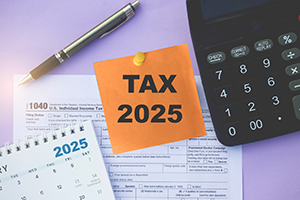
Plenty of tax changes are lining up as the calendar turns toward 2026, and knowing what’s coming can help you stay a step ahead. Before then, there’s also several moves to make filing your 2025 tax return as easy as possible.
Preparing to file your 2025 tax return
- Gather records to support deductions for no tax on tips and no tax on overtime. Review the approved occupations for qualified tips and confirm the amount of this benefit you expect to claim in 2025. You will need proof of these claimed amounts. The same holds true for overtime pay. Employers are not required to issue W-2s or 1099s with this information in 2025, but they should provide you with the necessary confirmation of the dollar amounts. Compare these employer-provided amounts with your records to ensure they match prior to filing your tax return.
- Look for new Form 1099-DA. If you own cryptocurrency or other digital assets, you may see this new form. Starting with the 2025 tax year, exchanges and brokers must report certain cryptocurrency and digital asset transactions, so you should track cost basis, sale dates, and wallets used to avoid mismatches or questions from the IRS.
- 1099-Ks may still be issued. You shouldn’t see a Form 1099-K from a payment processor such as PayPal or Venmo unless you have 200 or more transactions amounting in more than $20,000 in payments from the processor. But because of the many tax law changes in this area you may still receive a Form 1099-K in error. If you receive one, don’t throw it away! Include it with your other tax documents for proper reporting on your 2025 tax return.
- Review IRA and HSA accounts. If you have an IRA or HSA account, you can make 2025 contributions up until either April 15, 2026 or the date you file your return, whichever is earlier.
What’s new in 2026
- Above-the-line charitable contributions. You can deduct $1,000 of charitable contributions if single or $2,000 if filing jointly. This is available to you whether you use the standard deduction or itemize your deductions. There’s also the introduction of a 0.5% floor for itemizing charitable contributions.
- Itemized deduction phaseout is back. If you’re in the top 37% tax bracket, your itemized deductions could be reduced. This phaseout of deductions is being re-introduced beginning in 2026.
- Gamblers take a loss. Losses from wagering transactions are now limited to 90% of such losses. Under the previous law you could claim deductions up to the amount of your winnings. For example, if you won $10,000 and incurred $15,000 in losses over the course of a tax year, you could deduct $10,000 using the previous law. Under the new law you can only deduct 90% of your losses, or $9,000 in this example.
- Mortgage insurance premiums can be reported as an itemized deduction.
- Elimination of many energy credits. This includes the credit for purchasing electric vehicles after September 30, 2025 and the elimination of many residential energy efficient purchase credits at the end of 2025. So plan accordingly.
Your Year-End Tax & Financial Checklist

Year-end is more than just wrapping gifts and planning celebrations – it’s the last chance to make smart money moves that can reduce taxes and set the stage for a confident start to the new year. Use this checklist to help cover the essentials.
- Check tax withholdings. Do a quick check to see if your paycheck withholdings will match your tax liability. If you had a big refund or owed a large amount last year, you can anticipate the same will happen this year. So if you have not already done so, adjust your W-4 so you’re closer to even. Then after filing your 2025 tax return, revisit your withholdings and make any fine tune adjustments for the 2026 tax year.
- Max out tax-advantaged accounts. If you have a Health Savings Account, try to max out your annual contribution limits. This serves a dual purpose: paying for health expenses with pre-tax dollars PLUS any unspent contributions can be invested and used for future needs. Next take a look at retirement accounts like 401(k)s, 403(b)s, or IRAs before the year closes and contribute as much as possible up to the annual limits.
- Use up FSAs. Flexible Spending Accounts often have use-it-or-lose-it rules. So check your balance and submit reimbursements for eligible medical or dependent care expenses. Some plans offer a short grace period or a limited carryover, so know your deadlines to avoid forfeiting money.
- Plan for life changes. Marriage, divorce, a new child, or a change in employment can all alter your tax situation. Be prepared for any changes these life events may cause.
- Clarify dependency claims. If family members provide or receive support, coordinate who will claim dependents on tax returns. This helps prevent IRS mismatches and ensures valuable credits like the Child Tax Credit go to the right filer.
- Harvest investment losses (or gains). Review your portfolio to realize losses that can offset capital gains. If your income is low this year, you might even be able to harvest gains at a lower tax rate (maybe even 0%!). Be careful to avoid wash-sale rules.
- Review your budget and spending. Look back over your expenses for 2025 to spot trends. Did you meet your savings goals? Were there surprise costs that could be planned for next time? Adjust your budget now while memories are fresh.
- Check your emergency fund. Aim to keep three to six months of living expenses in a readily accessible account. If you’ve dipped into it this year, make a plan to replenish it, and review whether inflation or lifestyle changes mean you need a larger cushion.
- Review insurance coverage. Health, life, home, and auto policies all deserve a fresh look. Confirm coverage levels still fit your needs, compare premiums, and check that beneficiaries are current.
- Update beneficiaries and legal documents. Wills, trusts, and powers of attorney can become outdated quickly. Confirm that beneficiaries listed on retirement accounts and life insurance policies align with your estate plans.
- Talk as a family. Finally, gather around the table for an open conversation about finances. Discuss goals, responsibilities, and plans for the coming year. Shared understanding builds financial strength, which is the best gift you can give each other before the year ends.
Spend Less with These 5 Money Tips

Rising costs across nearly every kind of product and service have stretched everyone’s budgets, making each dollar feel a little tighter. Here are some tips to spend less to help offset the effect from these higher prices.
- Pay down high-interest debt. You can start spending less money today by paying down high-interest debt. Data from the Federal Reserve shows people who don’t pay off their credit card balance each month pay an average interest rate of 22.83%. For a monthly credit card balance of $500, this interest expense costs you $9.51 a month, or just over $114 a year.
- Revisit your subscriptions. Write down how many monthly subscriptions you’re paying for, then add up the monthly cost. Then ask yourself the following questions: Can you do without some of these subscriptions? Can you cut the cost of some of these subscriptions? Are there some with overlapping benefits? Maybe you’ll discover a subscription you completely forgot about. You don’t have to cancel all of them, but getting rid of just a few can help you spend less each month.
- Shop around for insurance. Loyalty to an insurance company doesn’t always pay off. Consider shopping around and comparing rates for homeowners, auto, & umbrella insurance, along with other insurance coverage you may have.
- Eat at home. Limit how often you dine out or stop for take-out. Your wallet will thank you! According to data from the Bureau of Labor Statistics, overall food spending was up 6.9% in 2023 (the latest year data was available), partly driven by an 8.1% increase in food spending away from home.
- Start using a budget. Finally, spend less by creating a written monthly budget and sticking to it. Find a budgeting app that you like the look and feel of, then create a budget within that app to help you decide how much to spend each month in various categories. Once the budget has been created, be sure to keep it updated throughout the month, instead of waiting until the last week to get it up-to-date.
The cost of everything may have skyrocketed, but you still have at least some control over where your money goes each month. Consider these steps to cut your spending, and you may be surprised at how much you save.